No products in the cart.
Return To Shop0 Days
0 Hours
0 Mins
0 Secs
XStore is the Most Customizable & WooСommerce Theme Shop Now

9,99 €
Every parent of a toddler knows this exact moment, or some close variation of it. The wrong shoe. The banana that snapped instead of staying whole. The car seat buckle that clicked one second before your toddler was ready. From the outside, it looks like a meltdown over nothing. From the inside of a toddler’s still-developing brain, it’s a genuine, overwhelming crisis — and no one handed you a manual for what to actually do about it.
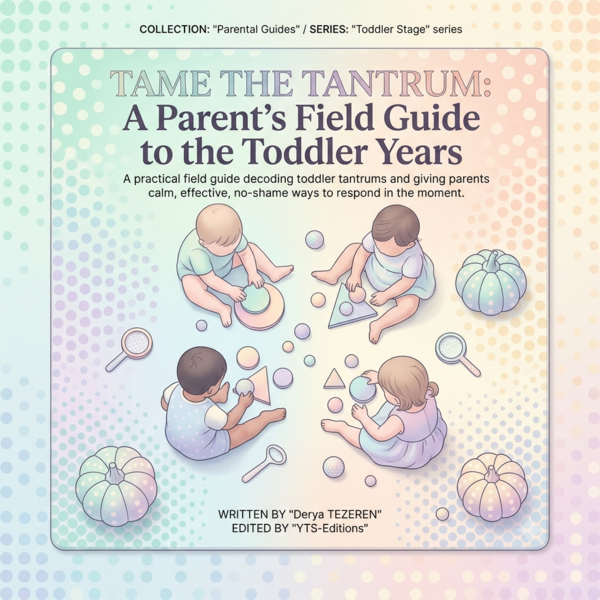
Tame the Tantrum is that manual.
The tantrum isn’t happening to you — it’s happening in your toddler’s brain, and understanding that changes everything about how you respond. This isn’t a parenting philosophy book full of theory to absorb for later. It’s a field guide, built for parents who are tired of vague advice like “just stay calm” and want to know exactly what to say and do — before, during, and after a meltdown.
Here’s what’s actually happening during a tantrum. The part of your toddler’s brain responsible for logic, patience, and impulse control — the prefrontal cortex — is still years from being fully developed. Meanwhile, the part responsible for big, fast emotional reactions is fully online and firing on all cylinders. When your toddler wants the blue cup and gets the green one, that mismatch between want and reality doesn’t register as a minor inconvenience. It registers as a genuine crisis, because they don’t yet have the neural hardware to tell the difference.
This is why reasoning rarely works mid-tantrum. You cannot logic your way into a brain that isn’t currently capable of logic. Saying “it’s just a cup, calm down” to a mid-meltdown toddler is a bit like asking someone mid-panic-attack to “just relax” — technically reasonable, practically useless.
Understanding this doesn’t make tantrums stop happening. Your toddler is still going to melt down over the wrong cup, the wrong shoe, the wrong shade of banana. But it changes how you respond — from managing behavior to correct, to supporting a brain that’s still under construction. That shift is what this entire guide is built around.
What’s Really Happening in a Tantrum. The foundational chapter that reframes everything — the neuroscience of toddler meltdowns explained in plain, practical language, so you understand exactly why reasoning doesn’t work mid-tantrum and what actually does.
Mapping Your Toddler’s Triggers. While every toddler’s brain works the same way, every toddler’s tantrums have their own patterns. This chapter gives you a practical trigger map — hunger, overstimulation, transitions, and more — so you can identify your own child’s specific patterns and often step in before the wave even builds.
In-the-Moment Calming Scripts. The heart of this field guide: word-for-word language you can use immediately, whether you’re at home or standing in the cereal aisle. No vague advice, no theory — actual scripts built to be used in real time, mid-meltdown, when you have zero bandwidth to improvise.
Surviving Public Meltdowns. Specific, tested strategies for the grocery store, the restaurant, and the airplane — the settings where a tantrum feels highest-stakes and most exposed. This chapter is built to help you leave the house with confidence again, instead of quietly dreading every errand.
Prevention: Reducing Tantrum Frequency. Practical, realistic adjustments to routines and environment that measurably reduce how often meltdowns happen in the first place — because the best tantrum response is sometimes the one you never have to use.
Building an Emotional Vocabulary Together. Age-appropriate language you can teach your toddler for what they’re feeling, laying the real foundation for genuine emotional regulation as they grow — not just surviving today’s tantrum, but building the skills that reduce tomorrow’s.
Tantrums vs. Something More. A clear, honest line between developmentally typical tantrum behavior and patterns that are worth a conversation with your pediatrician — so you’re never left guessing whether what you’re seeing is normal.
Caring for Your Own Calm. Because your regulation is the anchor your toddler borrows during a meltdown, this chapter gives you real strategies for maintaining your own composure — even on the day your toddler has already had three meltdowns before 10am.
Common Tantrum Scenarios, Solved. A practical, scenario-by-scenario reference covering the situations that come up again and again — bedtime battles, sibling-triggered meltdowns, transition tantrums, and more — so you can find your specific situation and a specific answer, fast.
Your Tantrum Response Cheat Sheet. A condensed, at-a-glance summary of everything in this guide, built to be your quick reference in the actual moment a meltdown starts — because in the middle of a grocery store meltdown, you need a cheat sheet, not a chapter.
This guide is for parents of toddlers one to three years old, across every parenting style and every level of exhaustion. It’s for the first-time toddler parent blindsided by the intensity of this stage. It’s for the parent standing in a grocery store aisle right now, phone in hand, searching for something — anything — that actually helps in the moment. It’s for anyone who’s tired of parenting advice that sounds good in theory and falls apart the second an actual toddler starts screaming.
You don’t need to become a perfect parent to handle tantrums well. You need a plan. This is that plan.
Most tantrum advice stops at “stay calm” and “be patient” — true, but not remotely actionable when you’re standing in the middle of an actual meltdown with nothing but frayed nerves and a clock ticking. Tame the Tantrum was built to close that gap between good advice and usable advice. Every chapter gives you something you can actually do — a script to say, a pattern to watch for, a specific adjustment to try — not just a philosophy to admire and forget by the next meltdown.
This is a field guide in the truest sense: short, direct, and built to be used in real time, not read once and shelved.
The meltdown on the kitchen floor isn’t a verdict on your parenting. It’s biology — and biology, unlike toddlers, is predictable. Once you understand what’s actually happening in that overwhelmed little brain, you can meet it with the calm, practical response it actually needs.
Download Tame the Tantrum now and walk into your next tantrum with a real plan, not just hope.
Instant digital download. Lifetime access. Keep it within reach — this guide is built to be your go-to reference through every stage of the toddler years, not just the tantrum you’re facing today.










Reviews
There are no reviews yet.