No products in the cart.
Return To Shop0 Days
0 Hours
0 Mins
0 Secs
XStore is the Most Customizable & WooСommerce Theme Shop Now

11,99 €
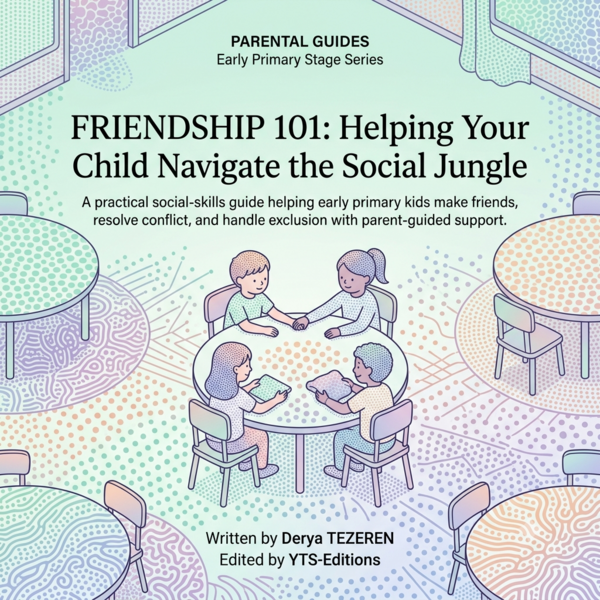
The easy, “everyone’s my friend” version of childhood friendship doesn’t last forever. Somewhere in the early primary years, the playground quietly gets more complicated — best-friend intensity, shifting alliances, exclusion that stings more than it used to, and conflict your child doesn’t yet have the tools to navigate on their own. You watch it happen from the sidelines, unable to step in, wishing you at least knew what to say to help.
Friendship 101 gives you exactly that language.
Playground politics are more complicated than they look, and most kids need real coaching, not just vague encouragement to “be nice” or “just go make friends.” This guide gives you the specific tools to help your child build genuine friendships, handle conflict constructively, and cope with the exclusion and hurt feelings that are an inevitable part of growing up. You can’t be on the playground with them — but you can give them the tools to navigate it, and this guide hands you the exact coaching language to use.
It’s tempting to assume some kids are simply “good with people” and others aren’t — and temperament certainly plays a role. But the deeper truth, and the one this guide is built around, is that friendship skills are genuinely coachable. Reading social cues, navigating conflict, recovering from exclusion, understanding when a moment calls for an apology — none of this is fixed. All of it responds to the right coaching, delivered consistently, over time.
This guide treats you as your child’s most important friendship coach — not someone who solves every social problem for them, and not someone who stands back entirely, but someone who offers the right tools at the right moments.
Why Friendship Skills Need Coaching. A grounding opening chapter making the case for active coaching over passive encouragement — why the social landscape gets genuinely more complex in the early primary years, and why explicit coaching matters more now than it did in preschool.
Friendship Skills by Age. A detailed, age-specific breakdown of what’s realistic to expect and coach at five, six, seven, and eight — because a script that works beautifully for a six-year-old can completely miss the mark with an eight-year-old navigating more complex social hierarchies.
Coaching Through Conflict. The practical core of this guide: a clear coaching framework plus specific, ready-to-use scripts for the conflict scenarios that come up again and again — sharing disputes, hurt feelings, disagreements over rules, and the everyday friction of childhood friendship.
Handling Exclusion and Hurt Feelings. Honest, practical guidance for one of the most painful early primary experiences — being left out. This chapter helps you validate real hurt while coaching concrete next steps, and addresses the harder conversation of what to do when your own child is the one doing the excluding.
Supporting the Shy or Anxious Child. Targeted strategies for children who find social situations genuinely more effortful — gradual, low-pressure approaches to building social confidence, distinct from simply pushing a hesitant child into overwhelming situations.
Planning Playdates That Build Connection. Practical, tested strategies for structuring playdates that actually build friendship rather than just filling an afternoon — group size, activity structure, and timing choices that meaningfully affect how well a playdate goes.
Talking to Teachers About Social Concerns. Clear guidance for proactive, well-framed communication with your child’s teacher about social concerns — because a teacher often has insight into your child’s social world that you simply don’t have access to from home.
Bullying vs. Normal Peer Conflict. One of the most important and hardest distinctions a parent has to make, addressed directly. This chapter gives you clear criteria for telling ordinary friendship friction apart from genuine bullying, plus a direct action plan for when it’s the latter.
Modeling Friendship Skills Yourself. A chapter grounded in a simple but powerful truth: your own visible friendships and social behavior are among the most powerful teaching tools available, often more influential than any direct coaching conversation.
Your Child’s Friendship Toolkit. A complete, practical recap bringing together the coaching principles, conflict scripts, exclusion strategies, and playdate planning tools from across the guide — your at-a-glance reference for whatever social situation your child brings home next.
This guide is for parents of early primary kids — roughly five to eight years old — especially those navigating visible social struggles or shyness. It’s for the parent who’s watched their child come home in tears over a friendship conflict and wished they knew exactly what to say. It’s for anyone tired of vague advice like “just be kind” and wants specific, actionable coaching language instead. And it’s for parents who want to help their child build genuine social competence and belonging — not just get through one difficult playground season.
Most friendship advice for kids stays abstract — encouraging kindness and empathy in general terms without giving parents anything concrete to actually say in the moment a conflict happens. Friendship 101 was built the opposite way: specific scripts, age-calibrated guidance, and a clear framework for distinguishing normal friction from genuine bullying, all grounded in the understanding that these are teachable skills, not fixed traits. This is a coaching manual, not a philosophy book — built to be used in the actual, ordinary moments a child needs help navigating their social world.
Every child deserves to feel like they belong, and to have the skills to build real, lasting friendships — not just survive the social jungle of early primary childhood, but genuinely navigate it with confidence. This guide gives you the coaching tools to help make that happen.
Download Friendship 101 now and get your complete friendship coaching toolkit for the early primary years.
Instant digital download. Lifetime access. Keep the conflict scripts and exclusion strategies close at hand — this guide is built to support you through every social season your child moves through, not just the one you’re facing today.








Reviews
There are no reviews yet.